Furniture
Forms that anchor a room
We describe furniture by the line of a leg, the depth of a seat, and the way timber or veneer carries light — the qualities that matter when you are choosing for a room.
Seating
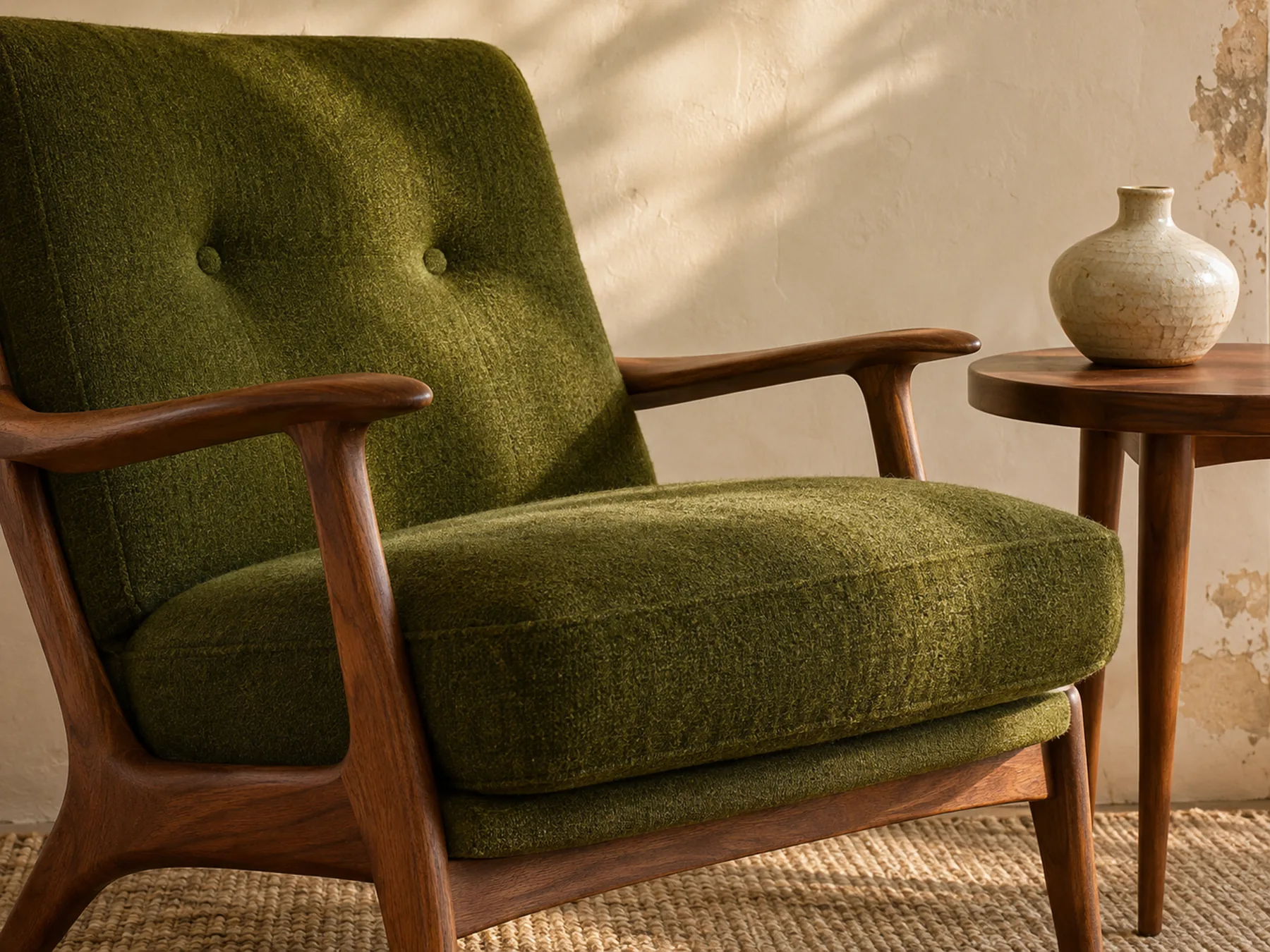
Bergères with generous roll arms, ladder-back side chairs that stack visually without stacking physically, and settees sized for reading nooks rather than stadium crowds. Look for seat height that suits your table, pitch that supports conversation, and upholstery that honest wear has already begun to soften.
- Open versus tight backs — air behind the shoulders or a composed silhouette against the wall.
- Turned versus square legs — colonial formality versus arts-and-craft steadiness.
- Patinated leather, loose linen, or taut horsehair — each asks different care and catches light differently.
Tables & surfaces
Gate-leg tables that forgive tight dining rooms, refectory boards that love long candles, and occasional tables shallow enough to sidle beside a sofa. Consider apron height for knees, leaf mechanisms for quiet expansion, and edge profiles that either catch crumbs or shed them.
Cabinets & case pieces
Glass-front bookcases that stage ceramics instead of books, low credenzas that ground a wall of art, and tallboys whose drawers tell you how the maker thought about storage. Proportional crown moulding, burl panels, and hardware scale keep a case piece from overpowering a wall.
Material chorus
Walnut that deepens to purple-brown in evening light, oak with honest ray fleck, painted pieces where fine cracking shows in the finish. Mixed periods sit more comfortably together when the wood and fabric tones already rhyme.